Give each offer a matching landing path
Put hours and arrival information beside a visit action. For household work, explain coverage and any authorization requirement; for commercial work, collect useful scope and location.

Google Ads Management for Lafayette, LA
 Good people.
A storefront visit, an owner-approved household job and a commercial quote need different landing pages and qualification. We build Lafayette Google Ads around the actual offer and coverage, then review useful responses with your team.
Tell us the service, the area and your campaign goals. We'll talk through a focused way to reach the right customers.
Or book directly on our calendar. Prefer a phone call? (478) 309-2117 ↗Lafayette, Louisiana customer context
A destination ad should land on a useful visit or appointment page. A household service campaign should explain coverage and authorization, while a commercial request needs suitable scope and job-location questions. Separate those journeys in your Lafayette test, then use qualified responses and accepted work to judge whether broader reach is useful.
of surveyed businesses used paid search advertising
U.S. surveyLafayette city owner-occupied housing unit rate
Lafayette city, LouisianaWhat we recommend for your business
Put hours and arrival information beside a visit action. For household work, explain coverage and any authorization requirement; for commercial work, collect useful scope and location.
Review search terms, out-of-area requests, response capacity and accepted jobs before increasing spend. Keep commercial inquiries distinct when their value and follow-up differ from household work.
Our recommendations draw on the research below and your business’s goals.
Use the details that help people reach your business or decide whether your team can serve the work.
Downtown Lafayette provides parking and arrival resources and hosts the recurring Downtown Alive! concert series. A destination business can help customers plan its own visit with current hours, directions and a clear reservation or contact action.
For your marketing: Give downtown destination ads current visit and parking information, then review useful reservations or responses with staff.
The city's Johnston Street-Louisiana Avenue corridor project runs from Louisiana Avenue at I-10 to Johnston Street at Ambassador Caffery. Businesses along it can keep their own entrance and access guidance easy to find and maintain as conditions change.
For your marketing: For corridor visit campaigns, keep the real entrance and current access guidance on the landing page.
The city identifies the University of Louisiana at Lafayette and Moncus Park along the Johnston-Louisiana corridor. When those destinations are relevant to a business's offer, clear directions to the business's actual entrance help customers plan the visit.
For your marketing: Keep a campus- or park-related offer distinct from a household or commercial service campaign, with the correct destination.
Researched 2026-10-05. Each statistic shows its geographic scope and observation period.
Household and broadband figures are Census ACS estimates. Employer establishments count business locations with employees. Marketing recommendations are Heart City Marketing’s interpretation of this context.








We do not lock you into six- or twelve-month agreements. Stay because the work is valuable.
Get clear answers from the people responsible for your strategy and results.
See your rankings, traffic, calls, leads and ad performance in plain language.
SEO and paid advertising case studies
Every campaign starts with a business decision. See how paid search fits into our work with service companies, then explore the campaign results with their dates and measurement context.
Selected work relevant to this service.
Dinosaur RoofingFrom a new business to $10k+ monthly profit in six months.See the story ↗Meta ads · Google Ads · Website · Brand
We built Dinosaur’s brand and website, then launched Google and Meta advertising to put the new roofing business in front of homeowners. We continued refining the ads, inquiry forms and mobile experience as the business grew.
Outcome reported by Heart City Marketing’s owner. Not an independently verified causal estimate or a forecast.
Let’s talk about your business ↗Rainman IrrigationA full schedule. More trucks. More crews.See the story ↗Local SEO · Advertising
Three years into our partnership, Rainman’s schedule is so full they’ve added trucks and crews to keep up. The business has grown fourfold over the last two years.
Our work together includes local SEO, Google advertising and email campaigns, helping Rainman reach more homeowners as the business grows.
Outcome reported by Heart City Marketing’s owner. Not an independently verified causal estimate or a forecast.
Let’s talk about your business ↗Selected Heart City Marketing client work across other markets—not represented as Lafayette clients. Results reflect the stated periods and definitions; your starting point and outcomes will differ.
One team. The right moving parts.
An effective Lafayette Google Ads plan starts with fulfillment. A destination campaign needs current hours, directions and a usable booking or appointment action. Household service ads need job coverage and any approval requirement; commercial ads need useful scope and location questions. We separate those journeys in keywords, pages and reporting, use a manageable test budget and let search terms and qualified responses guide the next change. Wider parish reach should earn its place through work your business can accept.
 01
Choose the service and territory before spend. Distinguish a visit from work at the customer's property, review irrelevant searches and give commercial requests a scope path that suits the service.
Explore Google Ads 02
Put arrival and booking details on destination pages. Explain coverage and authorization beside household estimate forms, and let commercial buyers supply the job information needed for a quote.
Explore Web Design 03
Strengthen useful service and location pages with accurate coverage and arrival details. Organic discovery can support the same priority while paid traffic remains accountable to its own cost and response quality.
Explore SEO 04
A real project or current visit promotion may suit Facebook and Instagram creative. Give that test a separate message and outcome rather than assuming browsing engagement equals an active service request.
Explore Meta AdsWhat our Lafayette Google Ads work includes
We connect the offer, location settings, landing page and response process so you can judge whether the spend supports useful work.
Separate destination visits, household estimates and commercial requests when their fulfillment differs. Define practical coverage and capacity.
Choose terms that fit the service, then review the searches generating clicks. Reduce irrelevant requests from actual campaign evidence.
Give visits current arrival details and bookings, household work coverage and authorization, and commercial buyers suitable scope questions.
Agree on who responds, staffed hours and what makes an inquiry suitable. Make missed calls and incomplete qualification visible in review.
Compare spend with suitable responses and accepted jobs. Review broader travel separately before increasing reach or budget.
The work, the fit and the tradeoffs
We align search campaigns with the services you sell and the places your team can cover. Query selection, exclusions and negative keywords help avoid paying for unrelated searches. Household service calls and commercial quote requests may need different campaigns.
A specific ad needs a page that answers the same customer need. We review offer wording, mobile contact paths and the information needed to qualify an inquiry rather than sending every visitor to a generic homepage.
Media spend pays the advertising platform; management fees pay for campaign work. They are separate costs. We discuss the service mix, available budget and lead handling before recommending allocation. Population or festival attendance cannot predict campaign returns.
Conversion tracking needs validation, and recorded calls or forms still need a quality review. We use search terms, campaign results and your feedback to refine targeting and spending. Click-through rate is engagement, not a lead or sales result.
We review the existing campaigns, tracking and account access before recommending changes. Your campaigns and the work produced for you remain yours.
No. Launch is the start of measurement and refinement. Search demand, competition, the offer, budget and follow-up all affect the result.
Make the landing page answer the promise in your ad. Explore Web Design ↗
 Real people.
Meet Heart City Marketing
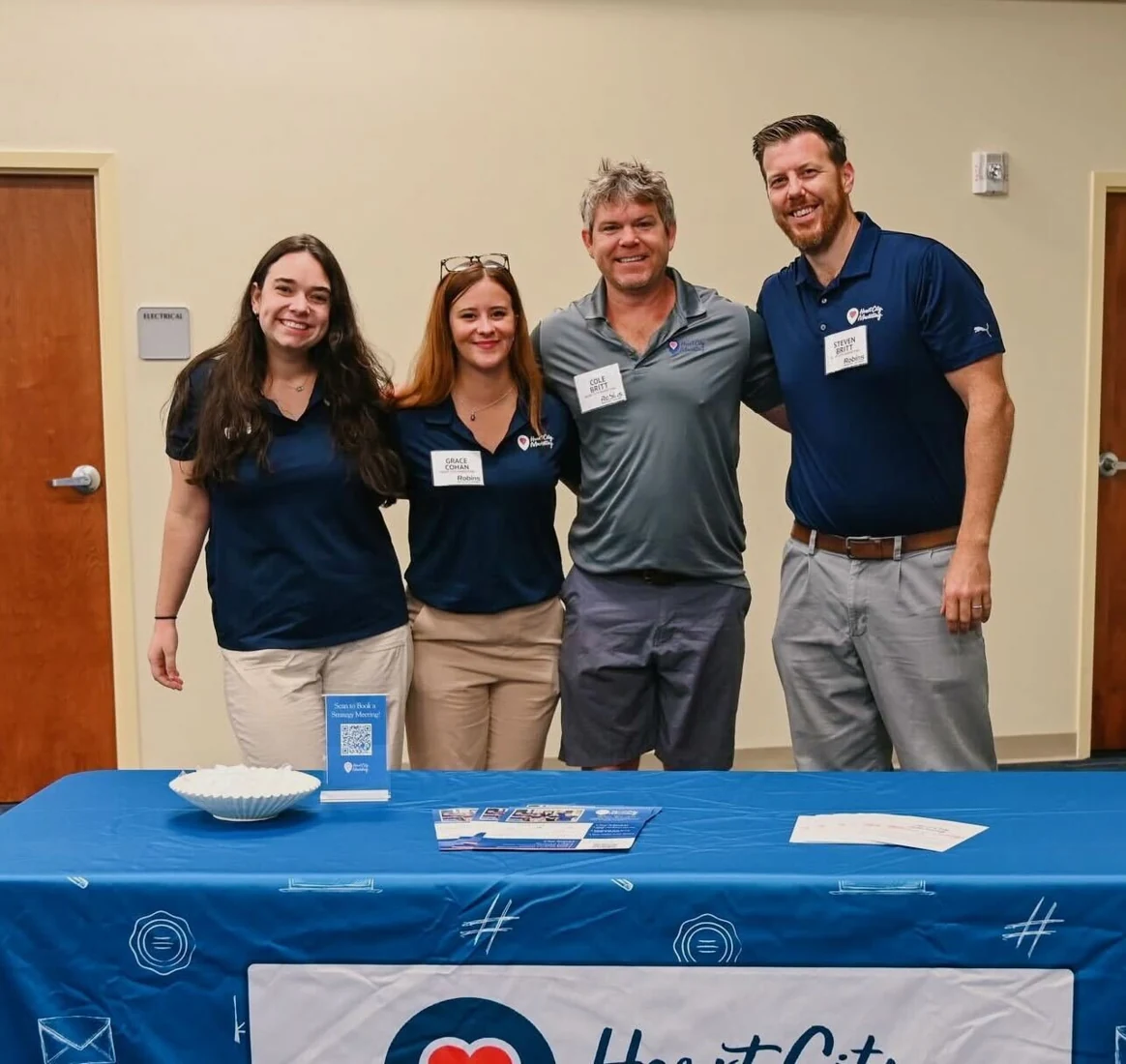
We’re a Georgia-based marketing team built around real relationships. For your Lafayette business, that means a remote partnership with people who get to know what you do, who you serve, and what growth needs to look like.
Strategy, design, search, and advertising belong in the same conversation. So do the questions that matter to you: what’s working, what needs attention, and what happens next.
Meet your next marketing teamOur process
Agree on the service you want to promote, the customers you can help and a sensible geography. Review existing campaigns, the landing page and how an inquiry is recorded.
Develop the ads and search focus, prepare the page people will reach and confirm the budget. The message and next step should fit together from the first click.
Review spend, search activity and recorded conversions alongside the quality of your inquiries. Adjust the campaign and page as you learn what brings the right kind of work.
Good questions. Straight answers.
Something else on your mind?
That’s what the conversation is for.
Start with the service, suitable territory and work your staff can accept. Agree on a test budget and what makes a response valuable, then review actual search terms and inquiry quality. Local click and lead costs need measurement; household and employer-location totals do not determine the auction or a profitable budget.
Separate them when the offer and next step differ. A visit ad needs the correct location, current hours and booking or arrival details. A household service ad needs territory, job fit and useful estimate questions. Distinct campaigns or reporting make it easier to understand which journey produces suitable work and how to improve it.
Explain the service and when owner or property-manager approval is required on the ad destination. Ask for job location and useful timing, then confirm authorization during follow-up. This helps customers assess fit without assuming ownership from a neighborhood or a housing statistic.
Ask the service or capability needed, enough scope to begin, the job location and timing, and a usable contact method. Agree on those questions with the person who prepares quotes. Keep commercial requests separate when evaluation, value or scheduling differs from household work so campaign review reflects the right business decision.
Only when the offer serves those customers and the destination is ready. Check current dates, hours and capacity, then define a specific visit or reservation action. A recurring event does not establish how many buyers will respond. Keep a temporary test separate from year-round services so its results can be assessed on their own.
When real responses show that broader work is serviceable and useful. Review job addresses, travel requirements, capacity and accepted work with staff. Adjust approved coverage and exclusions based on that evidence; a parish or metro label by itself should not decide where a crew travels or where the budget goes.
Lafayette, let’s build something good.
Tell us the offer, coverage and inquiry your team needs. We'll help define a campaign and useful review process.
Let’s make a plan